
West Bletchley Council
The Challenge
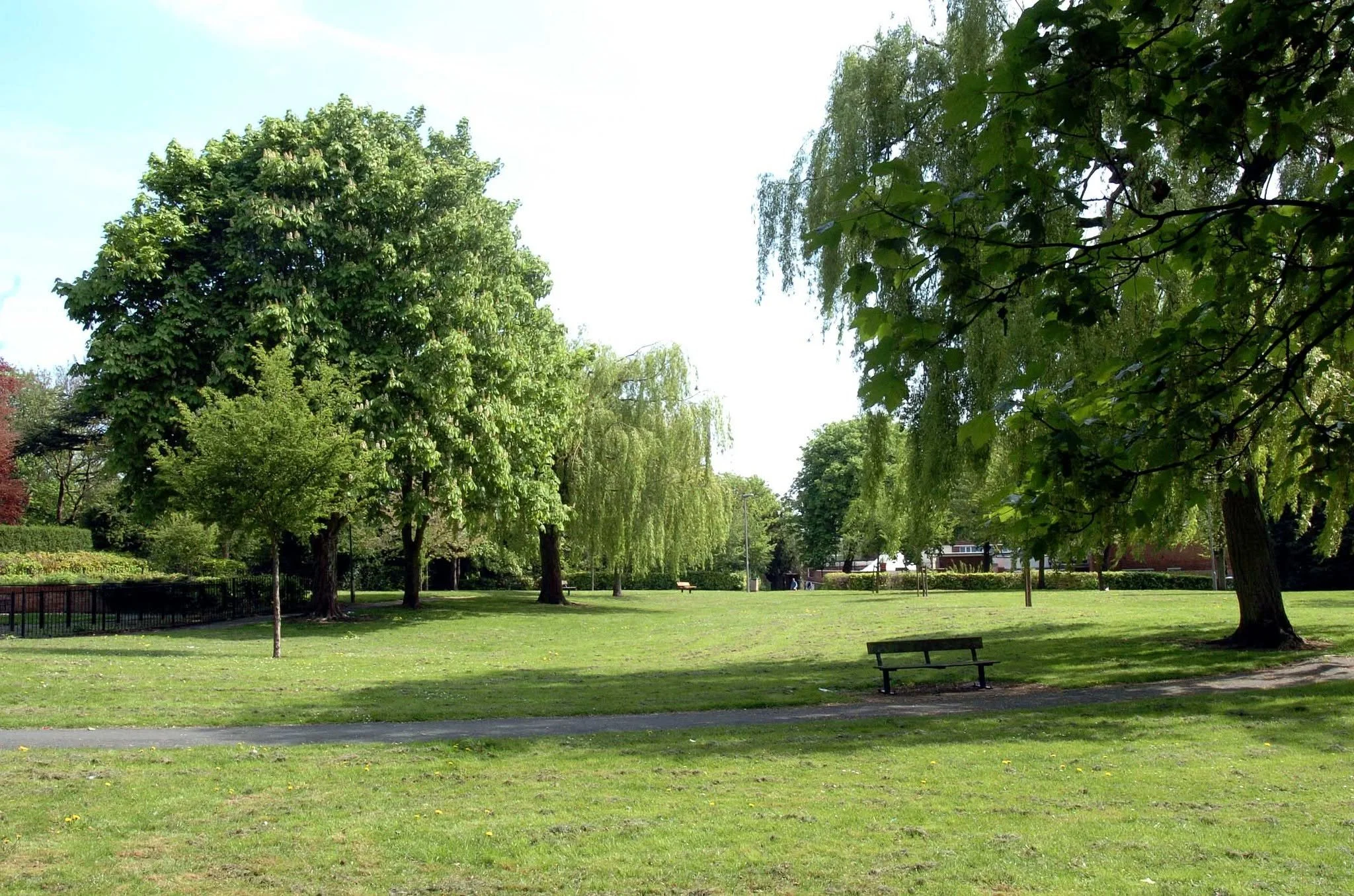
Rickley Park is a well-used amenity grassland site with a history that has shaped its soils. Originally agricultural land, the site was used for temporary barracks during the Second World War before being returned to grassland and later managed for leisure and sport.
We assessed the site to understand how improved soil structure, nutrient management and vegetation planning could help West Bletchley Council increase long-term carbon storage while improving turf resilience and landscape value.
Land useAmenity grassland
Area AssessedApprox 3 hectares
Study FocusSoil health, soil organic carbon, vegetation carbon and future sequestration potential
Key FindingsCurrent soil carbon stock was estimated at approximately 113 tonnes of elemental carbon per hectare to a depth of 300 mm, equivalent to around 414 tonnes of CO₂
per hectare.
The site’s theoretical attainable soil carbon level was modelled at approximately
195 tonnes of elemental carbon per hectare, equivalent to around 718 tonnes of CO₂
per hectare.
The carbon gain potential was estimated at approximately 80–82 tonnes of elemental carbon per hectare, equivalent to around 300 tonnes of CO₂ per hectare.
Across the assessed site, this represents a potential increase of around 246 tonnes of elemental carbon, or approximately 900 tonnes of CO₂.
Tree carbon storage was estimated at approximately 23.4 tonnes of carbon, equivalent to around 86 tonnes of CO₂, based on observed mature trees.
Our Approach
The site was divided into four assessment areas using land use, geology, aerial mapping, covariate analysis and remote sensed carbon mapping. Soil samples were taken from two depth profiles: 0–150 mm and 150–300 mm. Samples were consolidated by area and depth, then submitted to a QA-accredited laboratory.
The analysis included pH, available phosphorus, potassium and magnesium, soil texture, bulk density, nitrogen, organic matter, total organic carbon and total carbon. These results were used to model current carbon stock, attainable carbon levels and carbon gain potential.
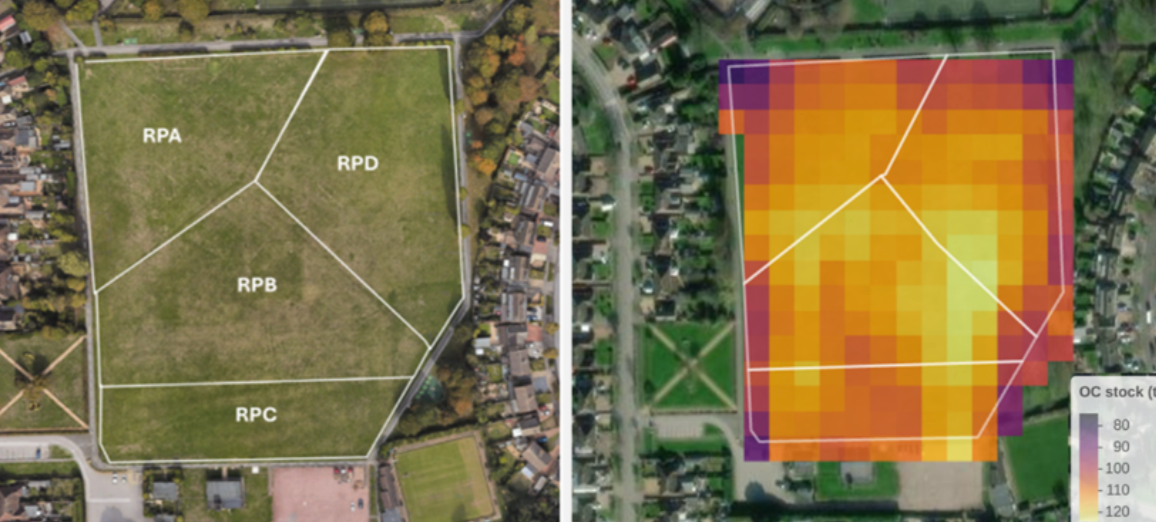
Figure 1: Remote sensed carbon mapping of Rickley Park, showing spatial variation in estimated soil carbon across the assessment areas.
The Data
Average soil pH was approximately 7.9, indicating slightly alkaline conditions.
Potassium levels were generally good, ranging around Index 2+ to 3.
Magnesium levels were generally sufficient at around Index 2.
Available phosphorus was acceptable in the upper profile but extremely low below 150 mm.
Soil organic matter averaged approximately 5.8% across the 0–300 mm profile.
Upper-profile soils were generally sandy clay loam, while lower-profile soils were generally clay loam
The Results
The assessment identified severe compaction below approximately 110–150 mm, limiting rooting depth and reducing the soil’s ability to build carbon in the lower profile.
Laboratory testing also showed very low available phosphorus below 150 mm, which can restrict root growth, early plant establishment and turfgrass resilience.
Although geological mapping classifies the site within the Hanslope soil association, the sampled soils showed higher sand content than expected. This suggests the ground may have been ameliorated during reinstatement after wartime use.
The Positive Climate Impact Potential
The findings show that Rickley Park has meaningful potential to increase carbon storage through
targeted soil health improvements.
If the site can move towards its modelled attainable carbon level, the gain would be broadly comparable to taking hundreds of cars off the road for a year or the long-term sequestration of a substantial number of mature tree.
Beyond carbon, the recommended improvements would also support deeper rooting, better drought tolerance, improved turf resilience, better water movement and stronger biological activity in the soil.
Rickley Park demonstrates how local authority green spaces can be managed as practical carbon assets. By combining soil testing, modelling and targeted management, councils can move beyond emissions reduction alone and begin actively storing carbon in public landscapes.
For West Bletchley Council, the case study provides a clear pathway to improve soil performance, enhance amenity grassland resilience and explore a wider circular green economy model using carbon-negative biological inputs.
We provided West Bletchley with a full briefing of recommended next steps in order to improve their soil health
and create a carbon improvement programme for Rickley Park, which the council are now able to take forwards.
Let’s chat.
Not sure where to start? We’re here to help. Get in touch and a member of our team will get in touch to answer any questions.